Solution · HA clusters
Production that survives a node failure without anyone making a phone call.
When your store, SaaS, or campaign site outgrows a single VM, Stack Harbor builds and runs the HA cluster underneath: redundant load balancers, a scalable app pool, clustered database, cache, and storage. No single point of failure, and releases that roll without downtime.
For when a single VM stops being enough: WooCommerce stores doing real revenue, SaaS signing bigger customers, lead-gen sites that cannot blink during a campaign.
When this matters
Single-VM hosting hits a wall at exactly the wrong moment.
One VM is fine until it is not. A launch-day spike, a kernel update, a noisy neighbour, a dying disk: with no second node and no defined recovery, each means lost orders, missed leads, or a 2am scramble.
- A spike saturates the VM mid-campaign and the only fix is a manual resize at 2am.
- Releases only ship at night because there is nowhere to drain traffic.
- App and database share one disk. Losing it loses the site, the orders, and the last hour of leads.
- Sessions, uploads, and cache live on local disk, so scaling out logs users out.
- Patching means an outage window.
- The VM falls over once a quarter and nobody can say why within five minutes.
Scope
What Stack Harbor manages inside an HA cluster.
Scope fits your workload, recovery target, and budget. Not every cluster needs every layer on day one; we start with what closes the biggest gap.
Edge & load balancers
- Smart DNS / CDN edge (Cloudflare, Route 53) into redundant endpoints
- Paired load balancers: no single point of failure at the entry
- L7 routing, health checks, node draining, session affinity only where needed
- TLS termination, cert renewal, rate limiting, abuse mitigation
Application worker pool
- Two or more stateless replicas, scaled vertically or horizontally
- Shared Redis cache, clustered when the workload warrants it
- Sessions and uploads on replicated storage (GlusterFS) or object storage (EFS / S3)
- Centralized per-node logs and metrics
Database architecture
- Primary + replica, or active-active Galera when writes must survive a node loss
- ProxySQL request routing with read-write split and lag awareness
- Tested failover runbook with documented promotion path
- Point-in-time backups
Operating model
- Rolling deploys, no maintenance windows
- Patching with drain, update, rejoin, verify
- Failover runbook and first-hour playbook
- Senior engineers as escalation, not tier-1
How it combines
The cluster is the substrate. The operating model makes it production.
Without a deploy pipeline, scaling rules, or a documented DR posture, an HA cluster is a more expensive single VM with the same risk. The solutions below combine with it in one engagement sized to the deployment and its budget.
-
Solution
Code deploy pipeline
Releases across the cluster with staging, approval gates, no-drop rolling deploys, and rollback to last-good in under five minutes.
Read more →
-
Solution
Auto-scaling environments
The app tier grows on traffic and contracts on cooldown, with cost guardrails you can defend to the board.
Read more →
-
Solution
Multi-region environments
A warm standby region and a rehearsed failover plan, so RTO and RPO become numbers you can stand behind.
Read more →
-
Solution
Environment management
Ongoing managed ops: 24/7 monitoring, patching, change windows, capacity reviews, a support desk for the day-to-day, senior engineers on escalation.
Read more →
Operating model
Assess. Design. Deploy. Maintain.
- 01
Assess
Workload and traffic review, single-point-of-failure inventory, how much downtime you can absorb, and a written architecture recommendation.
- 02
Design
Reference architecture sized to your workload: LB topology, replica count, DB primary + replica, shared cache and storage, monitoring, backups, runbooks.
- 03
Deploy
Build in staging, rehearse a failover, run a release end-to-end, then cut production over in a planned window with rollback ready.
- 04
Maintain
Monitoring, patching, release coordination, failover drills, capacity reviews, and senior escalation when production gets noisy.
Technical blueprint
Reference shape for a three-node HA cluster.
A small HA cluster is three pieces done right: load balancer, app replicas, database. Failover is automatic, rehearsed, and written down. The full build below removes every remaining single point of failure.
- App replicas are stateless: any node can die without losing a session or a cart.
- Database primary + replica with monitored lag; promotion is automatic and rehearsed against a clock.
- Sessions, uploads, and cache live on shared services (Redis + object storage), never local disk.
- Releases roll node-by-node with health-check gating: no maintenance windows, no missed orders.
Reference architecture
No single point of failure — at any layer.
The full build: every layer that can fail is paired or clustered. Smart DNS and a CDN edge steer traffic to a redundant load-balancer pair; the application pool scales vertically or horizontally — on load, on a schedule, or automatically; database requests are load-balanced into an active-active MariaDB Galera cluster; sessions and object cache live on a Redis cluster; files sit on replicated shared storage (GlusterFS) or object storage (EFS / S3); and everything snapshots to off-host backup. Any single node can be lost — the environment keeps serving.
- WEB LOAD BALANCERSNGINXlb·1
- WEB LOAD BALANCERSNGINXlb·2
- app·1
- app·2
- app·3
- app·4
- app·5
- app·6
- DB LOAD BALANCERSProxySQLdb–lb·1
- DB LOAD BALANCERSProxySQLdb–lb·2
- REDIS LOAD BALANCERSHAProxyredis–lb·1
- REDIS LOAD BALANCERSHAProxyredis–lb·2
- M·1
- M·2
- M·3
- M·4
- M·5
- R·1
- R·2
- R·3
- S·1
- S·2
- S·3
FAQ
What founders and CTOs ask before they cluster.
-
What does "no single point of failure" actually mean here?
Every layer that can fail is paired or clustered: a redundant load-balancer pair behind smart DNS and a CDN edge, stateless app workers, database requests load-balanced into active-active Galera, sessions and cache on clustered Redis, files on replicated or object storage with off-host backups. Losing any single node degrades capacity, not availability.
-
How many nodes do we actually need?
For most SMB workloads, three pieces: a load balancer, two app replicas, and a database primary + replica. Heavier traffic means four or five app replicas behind a dedicated cache tier. We size on measured traffic, not a round number.
-
Will we have to rewrite the app?
Almost never. The usual changes are sessions off local disk, uploads to object storage, and a shared cache: config changes, not rewrites, listed in the assessment before you commit.
-
Can we stay on our current host?
Sometimes. It needs private networking between nodes, a managed database (or the discipline to run your own well), and proper monitoring. If your host has that, we stay. If not, we recommend a migration and run it as part of the build.
-
How is this different from Kubernetes?
Kubernetes is one way to package a cluster: useful for some workloads, overkill for most growing SMBs. An HA cluster is about the operating model. The packaging follows the workload, not the trend.
-
What does this cost compared to a single VM?
More than a single VM, less than the lost-order math when that VM dies mid-launch. We do not publish flat pricing: scope is shaped to your workload after the assessment, and a fixed monthly quote follows.
-
Is this only for WordPress and WooCommerce?
No. The same shape supports custom PHP, Node, Java, Python, and Go. The architecture flexes per runtime. The operating model does not.
From the knowledge base
Building without a single point of failure, layer by layer.
One article per layer: edge steering, redundant load balancers, database request routing, active-active Galera, Redis clustering, replicated storage.
-
Networking
Geo-DNS routing: should you do it at the DNS layer, the LB, or the CDN?
Three different layers can route a user to the right region. Pick the wrong one and you inherit cache poisoning, multi-minute failovers, or a debugging nightmare.
Updated ·
-
Networking
Deploying HAProxy 2.8 + keepalived on a 2-node Ubuntu 22.04 cluster (production-ready)
Stand up a hardened HAProxy 2.8 + keepalived HA pair on Ubuntu 22.04 — VRRP floating VIP, L4/L7 backends, stats socket, health checks, syntax-validated reloads.
Updated ·
-
Other databases
Read-replica routing with ProxySQL — query-pattern rules and lag-aware fallback to writer
How to split read and write traffic in front of MySQL with ProxySQL — host groups, query rules by regex, mirror queries, and the lag threshold that yanks a stale replica out of rotation.
Updated ·
-
Other databases
Adding a new node to a running Galera cluster without taking writes
SST vs IST, donor selection, gcache sizing, and the operational steps to grow a Galera cluster from 3 to 4 nodes without write downtime.
Updated ·
-
Redis
Setting up Redis Cluster mode with sharding and replication
Bootstrap a six-node Redis Cluster, understand the 16384 hash-slot model, configure replicas per master, and verify cluster health before any traffic is routed.
Updated ·
-
Storage
Deploying GlusterFS 3-node replicated volume on Ubuntu 22.04 with TLS
Stand up a 3-node GlusterFS replicated volume on Ubuntu 22.04 — XFS bricks, management TLS, encrypted client I/O, healing strategy, and a self-heal monitor.
Updated ·
From the blog
Guides for the decision you are making
-
Managed Cloud Infrastructure
Disaster Recovery for an SMB: Backups, Warm Standby or Active-Active?
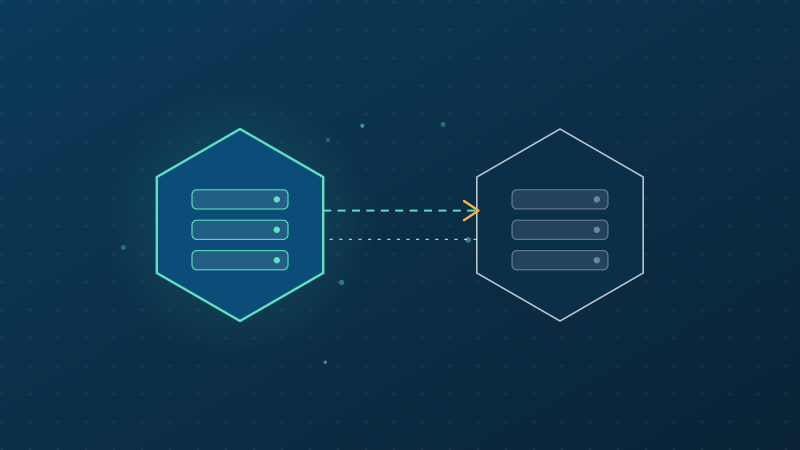
An SMB facing its first recovery clause can compare restore-tested backups, warm standby and active-active by RTO, RPO, cost drivers and operating burden.
· 10 min read
-
Business Outcomes
The Cost of Downtime: How to Estimate It and How Much Resilience to Buy
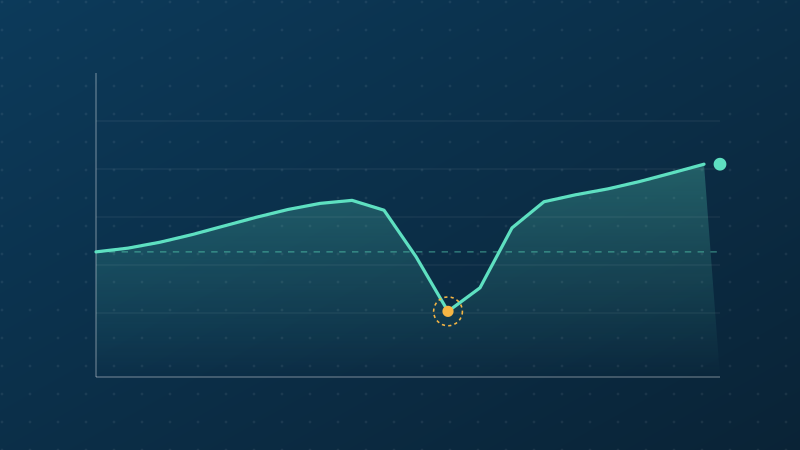
Owners, finance leads and operations leads can use this worksheet to estimate what an outage costs their business, then match that figure to the resilience worth buying.
· 10 min read
-
Managed WordPress & WooCommerce
WooCommerce Hosting Architecture: Single Server, Cluster or Autoscaling?
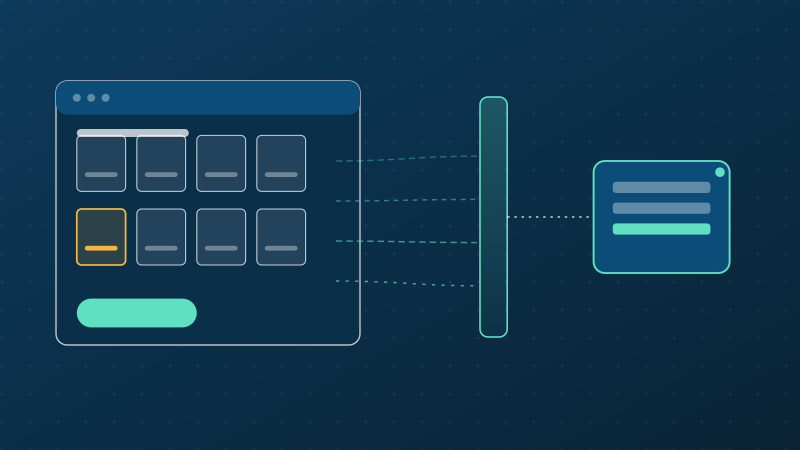
A WooCommerce store can run on one server, a load-balanced cluster or an autoscaling platform. Technical leads and store operators get criteria for choosing among them.
· 10 min read
You only cluster once. Get the shape right the first time.
Book an infrastructure consult. We walk your workload, single points of failure, and recovery target, then recommend the cluster shape that fits. Fixed quote to follow.